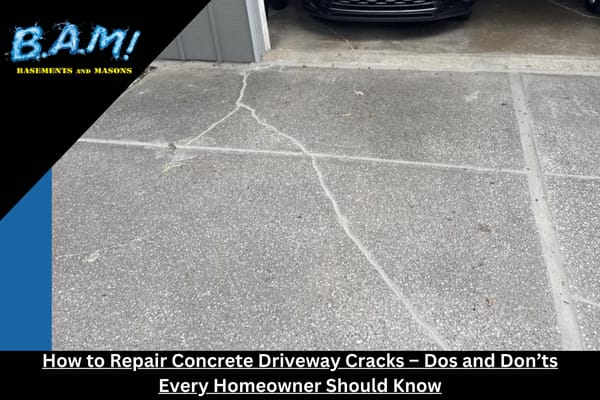
How to Repair Concrete Driveway Cracks – Dos and Don’ts Every Homeowner Should Know
Your driveway is one of the first things people notice when they pull up to your home. A smooth, well-kept driveway enhances curb appeal, but cracks and uneven surfaces can quickly turn it into an eyesore—and in some68 cases, even a safety hazard. Over time, wear and tear is inevitable but knowing how to address driveway cracks the right way can make all the difference.
At BAM Basements and Masons of Des Moines, we specialize in repairing and restoring driveways, ensuring they’re both functional and visually appealing. Here’s everything you need to know about why cracks form, how to repair them, and the dos and don’ts of driveway crack repair.
Why Is My Concrete Driveway Cracking?
Concrete is durable, but it isn’t indestructible. Cracks happen for a variety of reasons, and identifying the cause is the first step to choosing the right repair method. Common culprits include:
Shrinkage – As concrete cures, it contracts, which can create small hairline cracks. These are usually not structural concerns but should still be sealed to prevent water infiltration.
Temperature Fluctuations – Iowa’s hot summers and cold winters cause concrete to expand and contract. Over time, this stress can lead to cracking.
Moisture – Water seeping into cracks can freeze and expand during colder months, making the damage worse.
Erosion – Poor drainage or runoff can wash away soil beneath the driveway, leaving voids that cause cracking or sinking.
Heavy Loads – Constant pressure from vehicles can stress weak areas in the concrete.
Poor Installation – Using low-quality materials, improper grading, or insufficient thickness during installation leads to premature cracking.
Insufficient Control Joints – Without proper joints to guide natural cracking, concrete is more likely to fracture randomly.
Tree Roots – Roots can push up against the slab, causing uneven cracks and dangerous trip hazards.
Understanding the cause helps prevent future issues and ensures the repairs last.
When Should You Worry About Cracks?
Not all cracks require immediate panic. Some are cosmetics, while others signal deeper issues:
Hairline Cracks – Typically less than 1/8 inch wide. These can be patched easily and usually aren’t serious.
Wider Cracks – Larger than 1/8 inch may indicate poor drainage or structural stress and should be addressed quickly.
Uneven or Sunken Slabs – This often points to soil erosion or voids beneath the concrete and requires professional repair.
Pooling Water in Cracks – A sign that drainage problems could lead to worsening cracks during the freeze-thaw cycle.
Regularly inspecting your driveway allows you to spot these problems early before they require costly repairs.
Driveway Crack Repair Methods
Different cracks call for different solutions. Here are the most common repair methods:
Concrete Caulk or Sealant – Ideal for small cracks. A simple DIY project involving cleaning, sealing, and smoothing.
Concrete Patching Compound – Used for wider cracks, this provides a more durable fix than caulking alone.
Polyjacking (Polyurethane Foam Injection) – Perfect for uneven or sinking driveways. This innovative process involves injecting expanding foam beneath the slab to fill voids and lift the concrete back to its original position. Unlike traditional mudjacking, polyjacking is faster, less invasive, and provides long-term stability.
At BAM Basements and Masons, we often recommend polyjacking because it not only levels the concrete but also strengthens the soil underneath, preventing future settling.
Dos and Don’ts of Driveway Crack Repair
When tackling driveway cracks, keep these important tips in mind:
 Dos
Dos
· Clean cracks thoroughly before applying sealant or patching compounds.
· Use flexible sealant for minor cracks so it can move with the concrete as it expands and contracts.
· Call professionals if you’re dealing with large cracks, sinking slabs, or recurring issues.
 Don’ts
· Don’t ignore small cracks. They often worsen quickly.
· Don’t DIY major structural issues. Professional tools and expertise are required for lasting results.
· Don’t just cover uneven surfaces with concrete. Level the slab first (with polyjacking) to ensure stability before patching.
How to Prevent Driveway Cracks
Prevention is always better than repair. To extend the life of your concrete driveway:
Ensure proper installation. Work with experienced contractors who use high-quality concrete and include control joints.
Seal regularly. A protective sealer every few years helps keep water out and protects against Iowa’s freeze-thaw cycles.
Improve drainage. Gutters, downspouts, and proper grading prevent water from pooling near your driveway.
Avoid excessive weight. Don’t repeatedly park heavy trucks or equipment in the same spot.
Control tree roots. Avoid planting large trees too close to the driveway.
Clean regularly. Remove debris and clean spills to prevent surface staining and chemical damage.
These steps will help keep your driveway looking great while preventing cracks from forming in the first place.
When to Call the Professionals
\While small cracks can be a DIY project, significant issues require professional expertise. If your driveway has:
Large cracks wider than 1/8 inch
Sunken or uneven sections
Signs of soil erosion beneath the slab
Persistent drainage problems
…it’s time to call in the experts.
At BAM Basements and Masons of Des Moines, we specialize in concrete driveway repair and leveling. Our polyjacking services provide a long-lasting, cost-effective solution that restores your driveway without the mess of full replacement.
Keep Your Driveway Strong and Attractive
Your driveway doesn’t just get you from the street to your garage—it plays a key role in your home’s overall appearance and value. By understanding what causes cracks, addressing them properly, and following the do’s and don’ts of repair, you can keep your driveway functional and beautiful for years to come.
If your driveway in Des Moines is cracked, sinking, or uneven, contact BAM Basements and Masons today for a free inspection and repair quote. We’ll help you restore your driveway with solutions built to last.